
What Is Imbolc? A Quiet Season of Hope
In the heart of winter, when days feel endless and cold grips the land tight, a subtle shift stirs. The nights still rule, but light creeps back in small ways. Imbolc marks this quiet turn. It sits as the midpoint between the winter solstice, known as Yule, and the spring equinox, called Ostara. This cross-quarter day whispers of hope, not loud cheers. It calls for cleansing old ways and readying for growth. Think of it as a pause to nurture tiny sparks amid the dark.
Defining Imbolc: Timing, Mythology, and Names
Imbolc roots deep in ancient ways. It blends old pagan rites with threads of today. Let’s unpack its place in time and tale.
The Celestial Calendar: When Imbolc Occurs
Imbolc falls on February 1st or 2nd in the Northern Hemisphere. This date splits the gap between solstice and equinox. The sun reaches a key point in its yearly path. Days grow a bit longer each week. By early February, you might notice sunsets linger past five. This timing ties to old farming cycles. It signals winter’s hold starts to loosen.
Astronomers see it as one of four cross-quarter points. These mark the sun’s 45-degree spots in the sky. Imbolc links to the stars’ slow wheel. In the Southern Hemisphere, it shifts to August. But here, in the north, it fits the chill’s end.
Connections to Modern Observances (Candlemas and Groundhog Day)
Old rites often blend into new habits. Imbolc echoes in Candlemas on February 2nd. Christians light candles to honour light’s return. This stems from pagan fire rites for warmth and growth. Candles stand for the sun’s faint promise.
Groundhog Day shares the same day. In parts of America, a groundhog checks its shadow. A long shadow means more winter; none spells early spring. This folk tale mirrors Imbolc’s weather watch. Farmers once scanned for signs like this. Both keep the old hope alive in fun ways.
These ties make Imbolc feel close. You see its spirit in church glows or animal lore.
The Celtic Goddess Brighid and Sacred Fire
Brighid leads Imbolc’s heart. She rules poetry, metal work, and healing in Celtic lore. As a triple goddess, she guards home and craft. Fires honour her at the hearth.
Smoke from the fire cleanses space. It chases winter’s stale air. Brighid’s flame sparks new starts. Families kept hearth fires burning through the night. This act invited her blessing.
Her wells, too, hold power. People visited them for wishes. Brighid weaves Imbolc’s threads of care and spark.
The Core Themes of Imbolc: Light, Purification, and Fertility
Imbolc builds on light’s slow gain. It stresses clean starts and life’s stir. These ideas shape its quiet power.
The Return of the Light: Tracking the Sun’s Progress
The name Imbolc means “in the belly” or “shining out.” It nods to sheep heavy with lamb. Or to light breaking free. By February, sun hours climb past nine in many spots.
You track this with simple tools. A sun dial or app shows the shift. It’s not warm yet, but energy turns. Snow melts in patches. Birds sing a touch louder.
This return fuels hope. It says dark ends, even if slow.
Rituals of Cleansing and Renewal
Cleansing clears winter’s weight. Start with home sweeps. Wipe dust from corners. Burn sage or herbs for fresh air. These acts banish old woes.
In old times, people washed tools. They prepped for sowing seeds. Today, you might cleanse your mind. Journal out fears from the year past.
Renewal follows. Plant indoor herbs. Feel the shift to growth. These steps build a clean slate.
Sweep floors with salt water.
Open windows for fresh breeze.
Bless each room with a kind word.
Such rites keep Imbolc alive.
Ewe’s Milk and Agricultural Foreshadowing
Sheep’s milk flows first in February. Ewes lactate as lambs near birth. This fresh food eased winter’s end. Stores ran low; milk brought relief.
Farmers watched for this sign. It promised green fields soon. Fertility stirred under snow. Seeds waited in soil.
Now, it symbols new life. Bake with milk to honour it. Or visit a farm. See how nature hints at plenty.
Celebrating Imbolc: Traditions and Modern Practices
Bring Imbolc home with easy acts. Light candles. Craft simple items. Share a meal. These keep the old ways fresh.
Honoring the Flame: Candle Lighting Ceremonies
Fire leads the rites. Light candles to greet the light. Place them on your altar or table.
Try this simple step-by-step:
Gather white candles, one for each month to spring.
Sit in quiet dark.
Light the first. Say, “Light grows; hope wakes.”
Add more, naming joys ahead.
This builds the hearth’s warmth. Even one candle shifts the room. Feel Brighid near.
Crafting and Seeding Intention
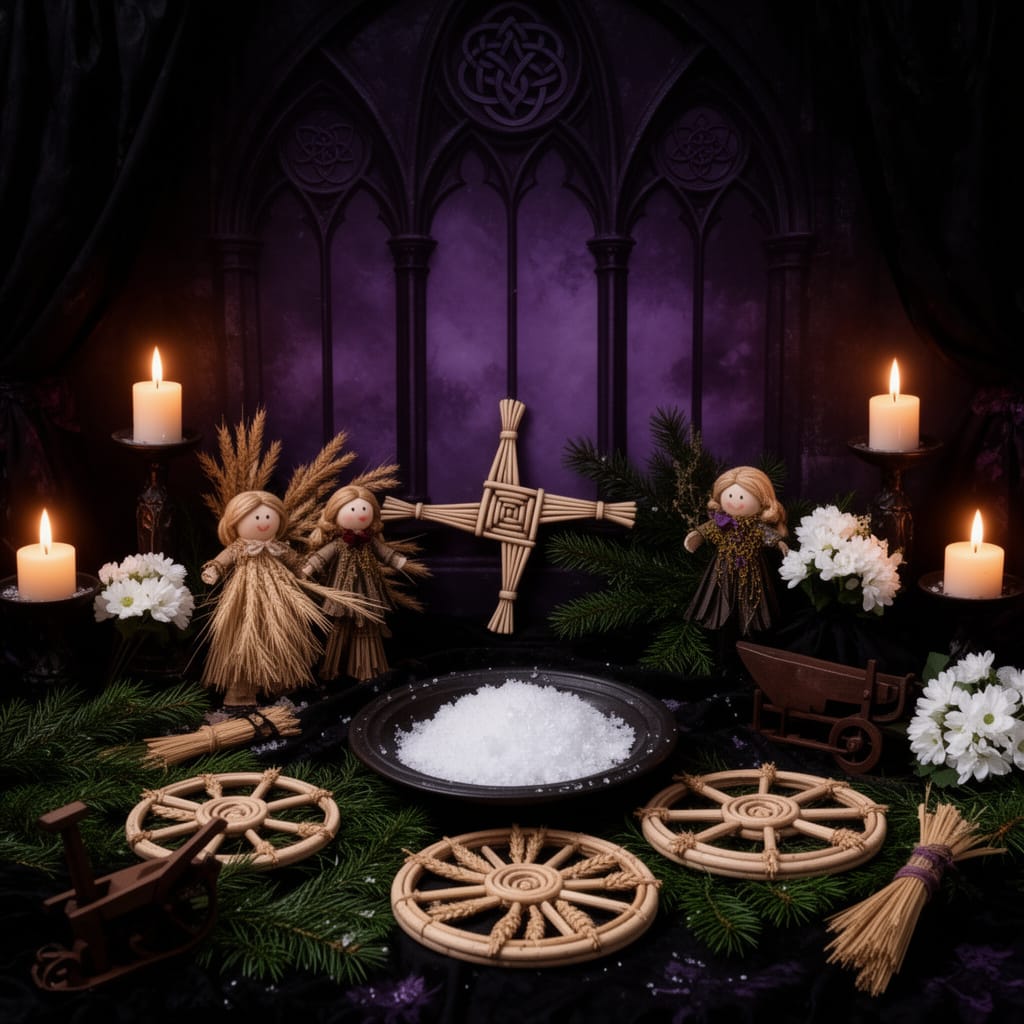
Make Brighid’s Cross from straw or reeds. Weave it like a sun wheel. Hang it for guard against ill.
Or craft a doll. Dress it in white cloth. It welcomes the goddess.
Seed intentions too. Write goals on paper. Bury them in soil. Watch them grow with the year.
Choose three aims: health, home, heart.
Draw them out.
Plant with care.
These crafts root hope deep.
Simple Feasts for Imbolc
Food ties to the land. Use milk and grains. They mark the ewe’s gift.
Bake oatcakes with butter. Or cheese scones. Puddings with cream nod to flow.
Serve hot porridge. Add honey for sweet times. Share with loved ones.
Oatcakes: Mix oats, flour, milk. Bake till gold.
Milk bread: Knead dough with fresh pour.
Herbal tea: Warm the belly.
These bites celebrate the shift.
Imbolc in the Modern Spiritual Context
Imbolc fits busy lives. It bridges dark and light. Use it for inner growth.
Bridging the Gap Between Solstice and Equinox
Yule brings big feasts. Ostara bursts with flowers. Imbolc sits quiet between. It tests resolve from winter’s dark.
Many skip it for flashier days. Yet it holds key power. Here, plans take shape. Seeds germinate unseen.
Embrace this middle. It builds strength for spring’s rush.
Actionable Steps for Cultivating Inner Hope
Start small projects. Sketch a garden plan. Or learn a new skill.
Meditate on winter lessons. What grew your grit? Carry that forward.
Walk daily. Note light’s change. This tunes your spirit.
Pick one goal weekly.
Track progress in a note.
Rest when needed.
Hope builds in these acts.
Integrating Natural Cycles into Daily Life
City life hides the cycles. But signs show. Buds swell on trees. Robins return early.
Check your patch. Watch clouds shift. Feel the air soften.
In flats, use plants. Grow herbs on sills. They link you to earth.
Stay open. Nature speaks soft.
Conclusion: The Quiet Promise of Spring
Imbolc teaches patient wait. It blends light’s return, clean starts, and life’s stir. From Brighid’s fire to ewe’s milk, it promises renewal.
This season asks you to tend small hopes. Clean your space. Light a flame. Plan ahead.
Look close now, in January’s fade. Sparks glow already. Embrace Imbolc’s quiet call. Let hope root deep for spring’s bloom.
The Gothic Quill

Leave a Reply